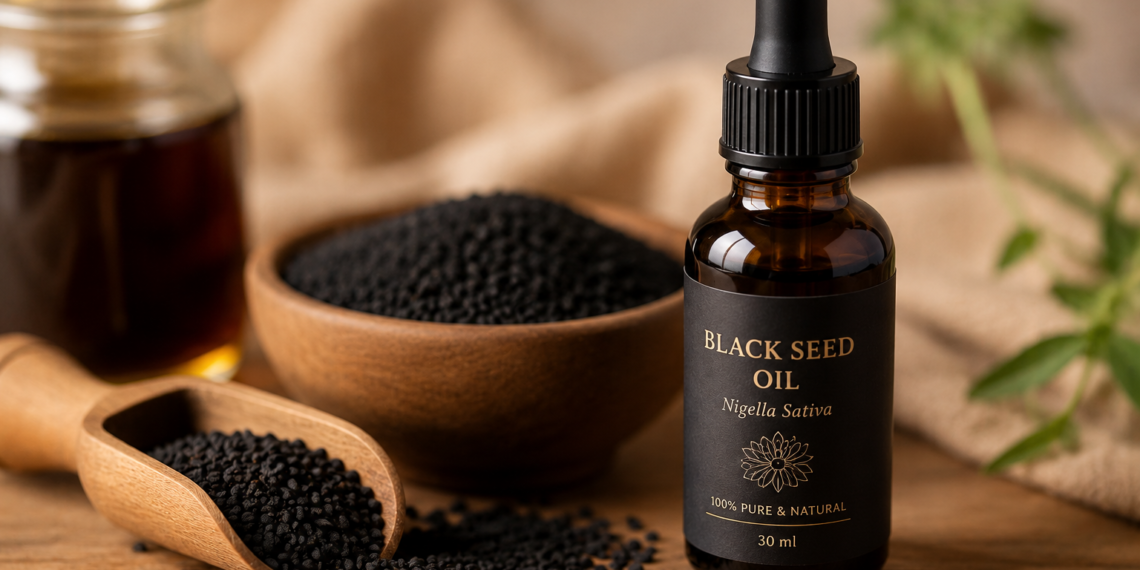
Black seed oil has been used in traditional wellness practices for centuries. It comes from the seeds of Nigella sativa — a plant also known as black cumin or kalonji — and today it is showing up in health stores, social media feeds, and conversations between adults living with diabetes who want to know: does it actually work?
The honest answer is: it shows real promise, but it is not a cure, and it is not a replacement for your medication or care plan.
Here is what the science says, in plain language.
Table of Contents
ToggleWhat Is Black Seed Oil?
Nigella sativa seeds contain a compound called thymoquinone, which researchers believe may influence inflammation, oxidative stress, insulin action, and metabolism. That is why scientists have been studying it for possible effects on blood sugar, cholesterol, and other markers that matter to people with type 2 diabetes.
What the Research Actually Shows
A 2025 systematic review and meta-analysis of 16 randomized controlled trials found that black seed supplementation in adults with type 2 diabetes was associated with meaningful reductions in:
- Fasting blood glucose
- HbA1c
- Total cholesterol
- LDL (“bad”) cholesterol
However, the same analysis found no significant improvement in post-meal glucose, fasting insulin, triglycerides, HDL cholesterol, body weight, or BMI. (Karimi et al., 2025)
An earlier 2019 systematic review reached similar conclusions — improvements in fasting glucose, HbA1c, and insulin resistance were noted, but the authors cautioned that studies used different doses and forms of the supplement, making firm recommendations difficult. (Hamdan et al., 2019)
Two well-designed clinical trials add useful detail. One 12-week placebo-controlled trial found improvements in fasting blood sugar, HbA1c, triglycerides, and LDL cholesterol in adults with type 2 diabetes taking Nigella sativa oil. (Heshmati et al., 2015) A one-year clinical trial found that adding black seed to standard oral diabetes treatment improved glycemic control and antioxidant markers compared to placebo. (Kaatabi et al., 2015)
The takeaway: Black seed may modestly support fasting blood sugar, HbA1c, and LDL cholesterol when used alongside standard diabetes care. The benefits are real but modest — not dramatic.
What About Inflammation and Immune Health?
Diabetes is closely linked to chronic low-grade inflammation, so researchers are interested in whether black seed’s anti-inflammatory properties could play a supportive role. Early evidence suggests it may help reduce oxidative stress and support antioxidant defenses. (Adam et al., 2022; Mashayekhi-Sardoo et al., 2024)
Black seed is also sometimes marketed as an “immune booster.” There is early research suggesting it may influence certain immune pathways, but this area is still emerging and is not well established specifically for adults with diabetes. (Salem et al., 2023)
Important Safety Considerations
Even natural products can interact with medications. Black seed oil may interact with:
- Diabetes medications — it may lower blood sugar further, increasing the risk of hypoglycemia
- Blood pressure medications
- Blood thinners
Some people also report mild digestive side effects. Product quality is another concern — studies have used different forms, including oil, seed powder, and capsules, so results from one form do not always apply to another.
If you are considering black seed oil, the smart steps are:
- Talk with your doctor or pharmacist first
- Do not stop or reduce prescribed medication
- Choose a reputable, quality-tested product
- Monitor your blood sugar closely
The Bottom Line
Black seed oil is not just hype — but it is not a proven diabetes treatment either.
The most balanced view is this: black seed oil shows genuine scientific promise as a complementary option for adults with type 2 diabetes, particularly for modest support of fasting glucose, HbA1c, and LDL cholesterol. At the same time, the evidence is still limited by small study sizes, varying formulations, and inconsistent dosing across trials.
That puts black seed oil in a familiar category: worth discussing with your healthcare team, but not something to treat as a shortcut.
The foundation of diabetes care still matters most — healthy meals, regular movement, good sleep, stress management, medication adherence, and routine check-ups. Black seed oil may have a supportive place alongside all of that. It just should not be asked to do the whole job.
References
- Karimi M, et al. Effects of black seed (Nigella sativa L.) on cardiometabolic indices in type 2 diabetic patients: A systematic review and meta-analysis of RCTs. Complementary Therapies in Medicine. 2025;90:103174. Read here
- Hamdan A, Idrus RH, Mokhtar MH. Effects of Nigella sativa on Type-2 Diabetes Mellitus: A Systematic Review. Int J Environ Res Public Health. 2019;16(24):4911. Read here
- Heshmati J, et al. Nigella sativa oil affects glucose metabolism and lipid concentrations in patients with type 2 diabetes. Food Research International. 2015;70:87–93. Read here
- Kaatabi H, et al. Nigella sativa improves glycemic control and ameliorates oxidative stress in patients with type 2 diabetes. PLOS ONE. 2015;10(2):e0113486. Read here
- Adam SH, et al. Potential health benefits of Nigella sativa on diabetes mellitus and its complications. Frontiers in Nutrition. 2022;9:1057825. Read here
- Mashayekhi-Sardoo H, et al. Application of Nigella sativa as a functional food in diabetes. Journal of Functional Foods. 2024;122:106518. Read here
- Salem A, et al. Effect of Nigella sativa on general health and immune system in young healthy volunteers. F1000Research. 2023;10:1199. Read here