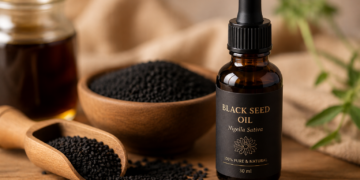
If you spend any time on health-focused social media, you have almost certainly seen sea moss. It shows up in smoothies, gels, capsules, and enthusiastic testimonials claiming it can do everything from balancing blood sugar to boosting immunity. For adults living with type 2 diabetes, the question is a fair one: Is there real science behind the hype, or is this mostly marketing?
The honest answer sits somewhere in the middle — and it is worth understanding exactly where.
Table of Contents
ToggleWhat Is Sea Moss?
Sea moss is a type of red seaweed, most commonly Chondrus crispus (Irish moss) or Gracilaria, harvested along the Atlantic coastlines of Europe, North America, and the Caribbean. It has a long history of traditional use — particularly in Ireland, Jamaica, and across the Caribbean — as a nourishing food and folk remedy.
Today, it is sold as a gel, powder, or capsule and marketed as a mineral-rich superfood. That part, at least, is not exaggerated. Sea moss contains a wide range of nutrients, including iodine, potassium, calcium, magnesium, vitamins A, C, E, and K, and significant amounts of dietary fiber — all of which play roles in metabolic health.
What Does the Research Actually Say?
Here is where things get more nuanced. The honest truth is that most of the research on seaweed and blood sugar has been done on brown seaweeds — like kelp and wakame — not specifically on Chondrus crispus or Gracilaria, the varieties most commonly sold as “sea moss.”
That distinction matters. Different seaweed species have different bioactive compounds, and results from one type do not automatically apply to another.
What the broader seaweed research shows:
A 2022 systematic review and meta-analysis of 18 clinical trials found that brown algae and its extracts significantly lowered both postprandial (after-meal) blood glucose and fasting glucose levels. (Vaughan et al., 2022, cited in Kim & Park, 2024)
A 2008 clinical study published in Nutrition Research and Practice found that adults with type 2 diabetes who supplemented with seaweed (sea tangle and sea mustard) for four weeks had significantly lower fasting blood glucose, lower post-meal glucose, reduced triglycerides, and improved antioxidant enzyme activity compared to the control group. (Kim et al., 2008)
A large prospective cohort study following 148,404 Korean adults over five years found that those with the highest seaweed intake had a 7% lower risk of developing type 2 diabetes compared to those with the lowest intake. This association was strongest in adults with normal body weight. (Kim & Park, 2024)
The takeaway: Seaweed as a food category shows genuine, consistent promise for supporting blood sugar and reducing diabetes risk. But the specific evidence for Chondrus crispus sea moss — the kind in most supplements — is still limited. As one medical expert put it plainly: “When it comes to sea moss specifically, we do not have enough research to say it works for blood sugar control.” (Dr. Edmond Hakimi, cited in SingleCare, 2026)
Where Sea Moss May Genuinely Help
Even without direct blood sugar evidence, sea moss contains several components that are biologically relevant to diabetes management:
Dietary fiber
Sea moss is rich in soluble fiber, which slows gastric emptying, reduces post-meal glucose spikes, and supports feelings of fullness. This is one of the most well-established mechanisms by which seaweed supports glycemic health. (Kim & Park, 2024)
Magnesium and potassium
Both minerals support insulin sensitivity and are commonly deficient in adults with type 2 diabetes. Sea moss provides meaningful amounts of both.
Antioxidants and anti-inflammatory compounds
Chronic low-grade inflammation is a driver of insulin resistance and diabetic complications. Sea moss contains vitamins C and E, polyphenols, and other compounds with antioxidant and anti-inflammatory properties that may help reduce oxidative stress. (Kim et al., 2008)
Iodine and thyroid support
Thyroid disorders and diabetes are closely linked — each can worsen the other. Sea moss is one of the richest natural sources of iodine, which supports healthy thyroid function and, by extension, energy metabolism and blood glucose regulation. (Kim & Park, 2024)
Weight management
Sea moss is low in calories and high in fiber, a combination that supports satiety and healthy weight management — both of which are central to type 2 diabetes care.
The Social Media Problem
Here is where the exaggeration comes in. Online, sea moss is often presented as a cure-all — something that will “fix” blood sugar, reverse diabetes, and replace medication. None of that is supported by evidence.
What the science supports is far more modest: sea moss is a nutrient-dense food that may offer supportive benefits as part of a balanced diet. It is not a treatment. It is not a substitute for prescribed medication. And the dramatic testimonials circulating online are not clinical evidence.
The gap between what social media claims and what research actually shows is wide — and for adults managing a serious condition like type 2 diabetes, that gap matters.
Important Safety Considerations
Sea moss is generally safe for most people in moderate amounts, but there are real risks to be aware of:
- Iodine overload — Sea moss is very high in iodine. Too much iodine can disrupt thyroid function, particularly in people with existing thyroid conditions. Anyone with hypothyroidism or hyperthyroidism should consult their doctor before using it.
- Blood thinners — Sea moss may have mild blood-thinning properties and could interact with anticoagulant medications.
- Carrageenan concerns — Some forms of sea moss contain carrageenan, a compound that may cause digestive discomfort and has been associated with gut inflammation in some research. People with inflammatory bowel conditions should be cautious.
- Heavy metal contamination — Seaweed absorbs minerals from its environment, including potentially harmful heavy metals like arsenic. Product quality and sourcing matter significantly.
- Diabetes medications — Any supplement that influences blood sugar or metabolism should be discussed with your healthcare provider to avoid unintended interactions.
The Bottom Line
Sea moss is not just hype — but it is also not the miracle cure social media makes it out to be.
The most balanced view: Sea moss is a genuinely nutrient-rich food with a long history of traditional use and a growing body of supportive science — mostly around seaweed broadly, not sea moss specifically. Its fiber, minerals, antioxidants, and anti-inflammatory compounds may offer real supportive value for adults with type 2 diabetes when included as part of a healthy, varied diet.
What it is not is a blood sugar treatment, a medication replacement, or a shortcut. The foundation of diabetes care — balanced nutrition, regular movement, medication adherence, and routine monitoring — still does the heavy lifting. Sea moss, at best, may have a modest supporting role.
If you are curious about adding it to your routine, start with a small amount, choose a reputable and quality-tested product, and have a conversation with your healthcare provider first — especially if you have a thyroid condition or take blood thinners.
References
- Kim C, Park K. Association between seaweed intake and risk of type 2 diabetes mellitus: a prospective cohort study. British Journal of Nutrition. 2024;131(7):1259–1267. doi: 10.1017/S0007114523002751. Read here
- Kim MS, Kim JY, Choi WH, Lee SS. Effects of seaweed supplementation on blood glucose concentration, lipid profile, and antioxidant enzyme activities in patients with type 2 diabetes mellitus. Nutrition Research and Practice. 2008;2(2):62–67. doi: 10.4162/nrp.2008.2.2.62. Read here
- Vaughan K, Ranawana V, Cooper D, et al. Effect of brown seaweed on plasma glucose in healthy, at-risk, and type 2 diabetic individuals: systematic review and meta-analysis. Nutrition Reviews. 2022;80:1194–1205. (Cited in Kim & Park, 2024)
- Williams V. Is sea moss good for diabetes? What you should know. SingleCare. Updated January 2026. Read here
- Roach LA, Meyer BJ, Fitton JH, et al. Improved plasma lipids, anti-inflammatory activity, and microbiome shifts in overweight participants: two clinical studies on oral supplemen